 Skip to content
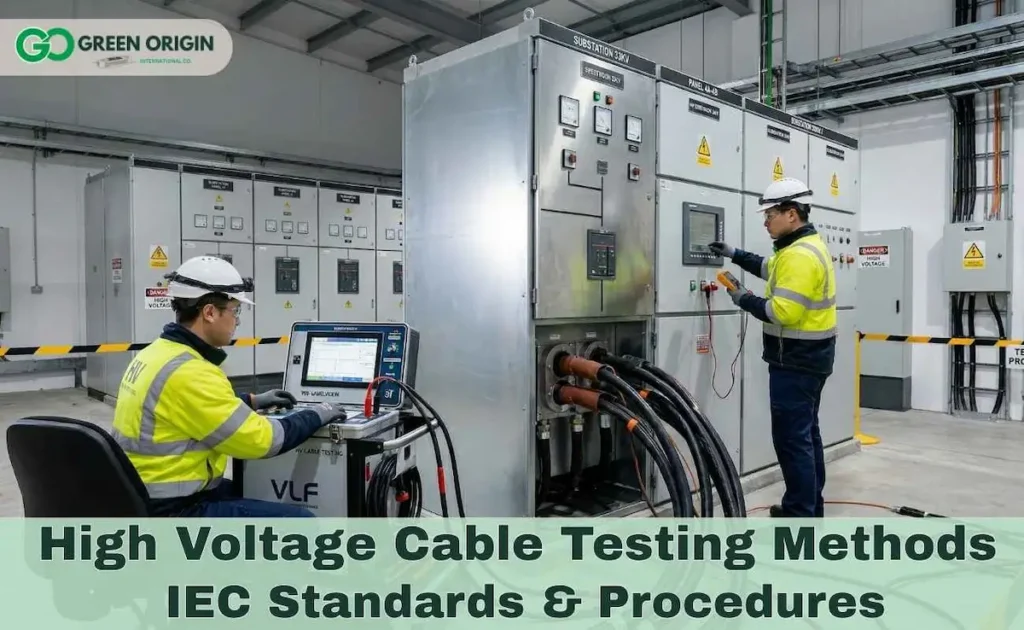
The reliability of electrical networks heavily depends on accurate high voltage cable testing methods. We ensure that every power line operates safely by relying on expert engineers and modern diagnostic equipment. This article explains the standard high voltage cable testing procedure and details the essential diagnostic categories used today.
What Are High Voltage Cables and Their Common Applications?
High voltage power cables transmit electricity at levels exceeding 35kV. They feature premium insulation, strong conductors, and protective shielding to ensure maximum safety under extreme electrical stress.
Applying proper high voltage cable testing methods is standard practice across many critical sectors to protect equipment like our sf6 gas insulated switchgear.
Renewable Energy Projects:
These cables serve as the primary connection linking wind farms and solar plants to the main grid, often passing through a cast resin dry type transformer.
Power Transmission and Distribution:
Utility networks rely on them to transfer electricity from generating stations to local substations and kyn28a 12 distribution panels.
Industrial and Commercial Infrastructure:
Thick conductors are essential for powering heavy machinery in large factories, mining sites, and complexes that use a complete set of switchgear.
Railways and Transportation Systems:
Metro systems and national rail networks depend on these robust cables safely routed via heavy-duty cable tray systems to maintain continuous transit.
Read More: difference between switchgear and distribution board.
What Is High Voltage Cable Testing and Its Main Purpose?
The main goal of any high voltage cable testing methods is to verify that the insulation is robust and ready for continuous service. Technicians apply controlled overvoltage to expose any hidden defects safely.
Global authorities like the IEEE mandate these checks to ensure components can handle sudden grid disturbances, switching surges, and lightning strikes.
Read More: Top Switchgear Companies in World.
The Most Effective High Voltage Cable Testing Methods Used in the Industry:
Engineers select from various proven high voltage cable testing methods to assess underground networks accurately.
Partial discharge:
This factory test measures apparent charge according to IEC 60270, locating microscopic voids and local defects inside the insulation.
Impulse (BIL):
By generating short-duration energy pulses that simulate actual switching surges, engineers can verify the basic insulation level.
Tan δ / Power factor:
Maintenance teams use power factor measurements to detect moisture, chemical aging, and contamination before they cause a breakdown.
hv cable hipot test:
A standard hv cable hipot test procedure applies voltage beyond normal service limits to evaluate insulation endurance based on leakage current.
Step-by-Step Test Procedures:
Executing a safe hv cable pressure testing procedure requires a professional crew following strict guidelines.
- Connect the testing device securely to the conductor and establish a solid ground.
- Raise the injected voltage gradually until reaching the required test level.
- Hold the electrical stress steady for the specified duration.
- Monitor the equipment carefully for any abnormal leakage current.
- Decrease the power smoothly until the meter reads zero.
- Discharge the cable completely to ensure absolute safety for the crew.
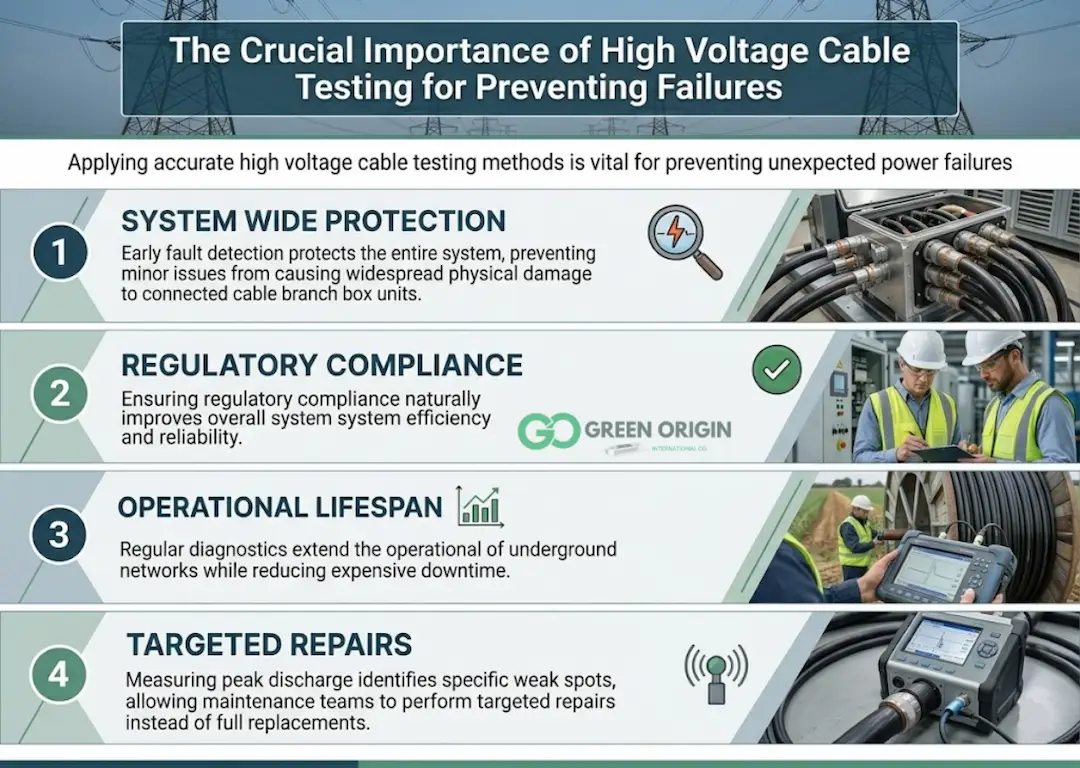
The Crucial Importance of High Voltage Cable Testing for Preventing Failures:
Applying accurate high voltage cable testing methods is vital for preventing unexpected power failures.
- Early fault detection protects the entire system, preventing minor issues from causing widespread physical damage to connected cable branch box units.
- Ensuring regulatory compliance naturally improves overall system efficiency and reliability.
- Regular diagnostics extend the operational lifespan of underground networks while reducing expensive downtime.
- Measuring partial discharge identifies specific weak spots, allowing maintenance teams to perform targeted repairs instead of full replacements.
Online vs Offline Partial Discharge Testing for Routine Cable Maintenance:
Offline PD testing is ideal for new equipment diagnostics, while online monitoring is necessary when you cannot interrupt operations. The following table highlights the key technical differences.
| Online PD testing | Offline PD testing | Parameter |
| Nil | Yes | Downtime |
| Tested when energized | Tested when isolated and de-energized | Equipment status |
| Good | Excellent | Fault detection |
| Actual operating voltage | Adjustable high-volt injection | Stress level |
| Moderate to high | Very high | Sensitivity |
| Routine PD monitoring | Root cause analysis and commissioning | Ideal for |
Essential IEC and IEEE Standards Governing Cable Testing Procedures:
Following recognized standards guarantees the accuracy and legality of all high voltage cable testing methods.
IEC 60060 Standards:
These guidelines define how to perform dielectric evaluations, covering AC, DC, and impulse testing alongside measurement rules for high-voltage equipment.
IEC 60270 standards:
This specific framework explains how to set up measuring circuits and quantify partial discharge correctly.
IEEE standards:
Utilizing these high voltage cable testing standards helps engineers adapt global practices for local apparatus like an mns low voltage switchgear.
How Green Origin Ensures Grid Stability Through Rigorous Cable Testing?
The Green Origin team provides professional services to guarantee network stability through proper high voltage test for cables.
- We integrate modern technology, including data analytics, IoT monitoring, and artificial intelligence into our equipment designs.
- Our manufacturing process is backed by deep professional experience in high voltage cable testing methods and electrical distribution.
- We supply high-quality products like our durable ring main unit configurations that satisfy strict IEEE and IEC regulations.
Trust Green Origin for reliable equipment and professional ht cable testing methods. Simply Contact us or use WhatsApp for outstanding results.
FAQs:
How to test high voltage cables?
Technicians use multiple high voltage cable testing methods, including AC/DC Hipot, Insulation Resistance (IR), and Impulse (BIL) evaluations.
How to test a burned high voltage cable?
Locating faults requires safe procedures like visual inspections, Very Low Frequency (VLF) diagnostics, or standard Hipot tests.
What is the IEC standard for HV cables?
The primary global standards governing these robust power lines are IEC 60840 and IEC 62067.
Why use VLF testing?
This method safely evaluates the internal insulation condition of medium and high voltage lines while protecting them from unintended damage.
